26 of My Favorite Books About Art

•November 30, 2011 • 2 Comments

So, I write a blog about food, wine and hotels and I’m posting about art? The easy answer is that I read most of these books while drinking a nice glass of wine. Not true. I just enjoy art history and museums and whenever I find myself in a casual discussion about these subjects, it invariably evolves into a conversation about some of the books that have influenced my interest in art. Friends frequently ask me to send them my list of books about the subject and over the years it has grown to the 26 listed below. Many of these reads are historical novels, but others are non-fiction, art history books. They are all available on Amazon, but it’s always smart to support your local independent bookshop when possible. I hope you enjoy these books as much as I have. With the exception of the Thomas Hoving listings, which comprise the first five, they are not listed in any particular order, with the exception of author or artist groupings. Check out Ralph Steadman’s DooDaaa; it actually contains a reference to wine!

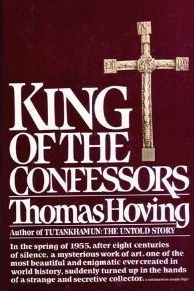
King of the Confessors, Thomas Hoving (Simon and Schuster)
Hoving’s quest for a treasure of medieval art—the Bury of St. Edmunds Cross
Two friends gave me this book many years ago as a gift and I, in turn, have done the same for many friends because it was my initial motivation to learn more about art history. Five of the books on this list are Hoving’s and he has written many more. Hoving (director of the Metropolitan Museum of Art from 1967 to 1977) was a great teacher and his enthusiasm for art was infectious. He certainly had a huge ego, but  in my humble opinion, he wasn’t arrogant. Hoving thought art should be enjoyed by the masses and he was instrumental in drawing larger, more diverse audiences to art museums. He was a pioneer of the blockbuster show, beginning with the King Tut exhibit at The Met. King of the Confessors chronicles Hoving’s acquisition, as an assistant curator in the 1960s, of the Bury of St. Edmunds Cross for the The Cloisters, the medieval branch of The Met (in Northern Manhattan) devoted to the art and architecture of Europe. After reading this engaging book, you will want to take the trip to The Cloisters, in Fort Tryon Park, and see the Bury of St. Edmunds Cross on display. Hoving also wrote a revised edition (King of the Confessors, A New Appraisal) that is available as an eBook. This Hoving quote from a Forbes.com interview sums up the allure of the book for me: “I wrote the original book in part because I wanted to show people the real art world, a world of backstabbers, sharks and con artists—not the salon world of tea-drinking esthetes.” Hoving was a brilliant, unique character. He passed away too soon, on December 10, 2009 at the age of 78.
Making the Mummies Dance, Thomas Hoving (Simon and Schuster)
Inside the Metropolitan Museum of Art
Hoving chronicles his 10-year tenure as director of the Met and drops plenty of names in this fun read. Perhaps Dominick Dunne said it best: “Hoving’s cocky, conceited, self-assured account of his controversial and turbulent tenure as Director of the Metropolitan Museum is guaranteed to offend most of his former colleagues, but is fascinating reading for anyone, like myself, who has ever wondered what goes on behind the scenes in that vast Central Park Palace of art. I couldn’t put it down.”

Tutankhamun, Thomas Hoving (Simon and Schuster)
The Untold Story
The story of the discovery of King Tut’s tomb. Hoving explores the many colorful characters involved in this monumental discovery. He eventually was responsible for bringing the original King Tut exhibition to The Met. The book is illustrated with 32 beautiful pages of color and black-and-white photographs.

American Gothic, Thomas Hoving (Chamberlain Bros.)
The Biography of Grant Wood’s American Masterpiece
Hoving offers his professional and personal opinions of one of the most famous paintings in American art and encourages you to search for small details that would otherwise be overlooked by the untrained eye. I always enjoy spending time in front of this treasure at The Art Institute of Chicago.

Master Pieces, Thomas Hoving (W.W. Norton & Company)
The Curator’s Game
Hoving adapted a game he used to play with fellow employees at The Met into this fun, educational exercise. The book lists 215 progressively demanding details of great works of art, along with a brief written clue, and then challenges you to identify the piece with your own curatorial eye. Fun and educational.

The Agony and the Ecstasy, Irving Stone (Signet)
The Passionate Biographical Novel of Michelangelo
This page-turner was made into a movie of the same name (1965) starring Charlton Heston and Rev Harrison, and directed by Carol Reed. In addition to Michelangelo and Van Gogh, Stone also wrote a Camille Pisarro biographical novel, which I still must read.

Lust for Life, Irving Stone (Plume)
The Classic Biographical Novel of Vincent van Gogh.
Stone noted in the afterward that his main source was Van Gogh’s collection of letters to his brother, Theo. This book encouraged me to dig deeper with Van Gogh, read his letters, and many other books. Viewing his work in museums becomes even more fulfilling after absorbing the information in this well-researched book. It was made into a movie of the same name (1956), starring Kirk Douglas and Anthony Quinn, and directed by Vincente Minnelli.

The Letters of Vincent van Gogh Edited by Ronald de Leeuw (Penguin Books)
Translated by Arnold Pomerans
Van Gogh was a prolific letter-writer and it is fascinating to wade through his thoughts in this 509-page treasure. As mentioned above, Stone heavily depended on these writings for his brilliant biographical novel, Lust for Life.

Portrait of Dr. Gachet, Cynthia Saltzman (Penguin Books)
The story of a Van Gogh Masterpiece, Money, Politics, Collectors, Greed, and Loss
A brilliant non-fiction work by Saltzman chronicling the provenance of Van Gogh’s portrait of the doctor who tried to help him before his untimely death at the age of 37. Cynthia Saltzman has degrees in art history from Harvard and UC Berkeley. She is also a Stanford M.B.A. and was a reporter for The Wall Street Journal. Enough said—great book.

The Yellow House, Martin Gayford (Little, Brown & Co.)
Van Gogh, Gauguin, and Nine Turbulent Weeks in Arles
Vincent van Gogh and Paul Gauguin couldn’t even last three months living together in the South of France, and Gayford’s well-researched book helps explain the volatile natures of these great artists. Nice photos, illustrations and even a diagram of the layout of the house they lived in.

Luncheon of the Boating Party, Susan Vreeland (Viking)
Vreeland explores the creation of Renoir’s beloved painting in this historical novel. After I read the books on this list, I was always inspired to seek out the art. This particular piece is owned by The Phillips Collection in Washington D.C.

Girl in Hyacinth Blue, Susan Vreeland (Penguin Books)
Vreeland suggests that there is a 36th Vermeer in this historical novel. She wrote this book about seven years before Luncheon of the Boating Party. You may also remember her from her first novel, What Love Sees, which was a CBS Sunday Night Movie in 1996.

The Lost Diaries of Frans Hals, Michael Kernan (St. Martin’s Press)
This novel takes you from twentieth-century New York into the life of Frans Hals in seventeenth-century Holland. A well-researched look into the life of one of Rembrandt’s contemporaries.

DooDaaa, Ralph Steadman (Bloomsbury)
The Balletic Art of Gavin Twinge
Steadman calls this a triography of his artistic alter ego, Gavin Twinge. I was first exposed to Steadman through his design of wine labels, specifically his work for Randall Grahm’s Bonny Doon Vineyard. And you were wondering if I could ever work food, wine, or hotels into this list?

The Judgement of Paris, Ross King (Walker & Company)
The Revolutionary Decade That Gave the World Impressionism
This excellent history book chronicles the tumultuous decade between two famous exhibitions: The scandalous Salon des Refusés in 1863 and the first Impressionist showing in 1874. I also learned much about French history above and beyond art.

The Unknown Masterpiece, Honoré de Balzac (New York Review Books)
Translated by Richard Howard
“This is the story of a painter who, depending on one’s perspective, is either an abject failure or a transcendental genius, or both.” This book also includes Gambara, a novella about a composer undone by his dreams. Balzac intended the two pieces to be presented together.

The Moon and Sixpence, W. Somerset Maugham (Vintage Books)
This biographical novel is loosely based on the life of Paul Gauguin. It was made into a movie (1942) and opera (1958), both of the same name. Gauguin was an interesting character. This book helps fill in some of the gaps in his complicated life.

The Sorcerer’s Apprentice, John Richardson (University of Chicago Press)
Picasso, Provence, and Douglas Cooper
This is Richardson’s memoir of his time spent living with Douglas Cooper, Pablo Picasso and Fernand Leger, among many others. Lots of moving parts here. I learned much about Picasso that does not appear in other books.

The Lost Painting, Jonathan Harr (Random House)
The Quest for a Caravaggio Masterpiece
Historical novel about the search for Caravaggio’s long-lost painting, The Taking of Christ. Caravaggio was a mysterious, troubled man who produced masterpieces of shadow and light in the Baroque period.

Girl with a Pearl Earring, Tracy Chevalier (Plume)
The tale of the creation of Vermeer’s famous painting, which subsequently became the motion picture of the same name, starring Scarlett Johansson. Well-written, fun read.

Lydia Cassatt Reading the Morning Paper, Harriet Scott Chessman (The Permanent Press)
A short, well-written and researched historical novel about the incredible Mary Cassatt. Cassatt, in my humble opinion, is one of the most interesting and underrated American artists of the late nineteenth and early twentieth centuries.

Provenance, Laney Salisbury & Aly Sujo (Penguin Books)
How a Con Man and a Forger Rewrote the History of Modern Art
This book will blow your mind. This is the stunning true story of an elaborate, years-long, con that shocked the art world. Hundreds of pieces were forged and sold (during the 1980s and 90s) before the scam was uncovered. This is a huge page-turner.

Odd man Out, Carol Armstrong (The Getty Research Institute)
Readings of the Work and Reputation of Edgar Degas
This is not light reading. Odd Man Out is a revision of Armstrong’s PhD dissertation at Princeton. This book is actually an analysis of the writings of Degas’s contemporary critics. I bought it because I am a big fan of Degas and wanted to learn more about what made him tick. Armstrong is NOT a Degas fan and proposes many contradictions in both his work and life. It is a well-written, scholarly effort and is not meant for poolside or beach reading.

Color, Victoria Finlay (Random House)
A Natural History of the Palette
This is a fascinating, extremely well-researched book about the history of colors, including their origins, and historical and economic importance. Finlay takes you around the world exploring, for example, the mines in Afghan that produced the ingredient for Michelangelo’s blue “ultramarine” paint, although he could not afford to buy it himself. You will also discover that, since ancient times, carmine red comes from the blood of insects. It is still used today in lipstick and Cherry Coke!  Fun and important read, but not always a page-turner.

Seven Days in the Art World, Sarah Thornton (W.W. Norton & Company)
This treasure is “a funny series of non-fiction narratives, which reveal the inner workings of the institutions that contribute to an artist’s place in art history.” It is based on extensive ethnographic research. If you are not familiar with ethnography (I wasn’t), she explains it in the Author’s Note. This was a fascinating read for me. Thornton is a brilliant sociologist and art expert, with an engaging, casual writing style. Seven Days in the Art World is one of my top five favorites of this list. www.sarah-thornton.com 

Artists’ Techniques and Materials, Antonella Fuga (The J. Paul Getty Museum)
Translated by Rosanna M. Giammanco Frongia
This incredible book, with beautiful illustration, helps explain how works of art are made, with an exploration of methods, techniques and materials. It covers drawing, printmaking, painting, sculpture, mosaic and intarsia, ceramic, glass, metalwork, jewelry, and contemporary techniques.

I hope you enjoy these books as much as I have. I’m looking forward to the next 26, and I mentioned a few of them above. I welcome your comments.


WSJ’s Lettie Teague “On Wine” and My Tweets

•October 9, 2011 • 1 Comment

I was pleasantly surprised to discover an e-mail in my inbox from Lettie Teague. She thanked me for reading her Wall Street Journal wine articles and also generously indicated that she has followed and read some of my blog posts. But her actual reason for the correspondence was to clarify the formats of the two distinct columns she writes: “On Wine” and “Drinking With.”

You see, if you follow me on Twitter (@ThomasFavorite), you know I am a loyal WSJ reader, and you may have noticed that I have not been shy with my opinions about some of Ms. Teague’s articles. Most of my Tweets have been positive, but there were a couple of snarky remarks about her “Drinking With” articles that included, what I call, celebrities. She prefers “accomplished and interesting people.” In her e-mail, she gracefully explained the focus of her two columns. “On Wine” is just that: commentary and information on wine appellations, producers, styles, etc. “Drinking With” is “intended as an entertaining (and perhaps, amusing) column featuring conversations with accomplished and interesting people, while drinking and talking about wine.” In my Tweets, I basically indicated that I wanted to hear more about wine and less about celebrities, but I neglected to at least acknowledge the focus of her two distinct columns.

Before I explain my angst over injecting “accomplished and interesting people” into wine writing, let’s get one thing straight about Lettie Teague. She is a successful, professional wine columnist and author. Me? I sell wine for a living and write this humble blog to share my thoughts and expertise, and I supplement it with Tweets. My opinions are based on many years of wine industry experience and travel, and representation of hundreds of wineries from around the world. I do not consider my writing to be in the same orbit as Ms. Teague’s. She is a pro and she is very, very good.

Lettie Teague, in fact, is currently a staff writer and wine columnist for The Wall Street Journal. She was also the executive wine editor at Food & Wine magazine for many years and wrote a monthly column called “Wine Matters.” She has won two James Beard Foundation Awards for wine writing, and is the author/co-author of two wine books: “Educating Peter: How Anybody Can Become an (Almost) Instant Wine Expert,” and “Fear of Wine: An Introductory Guide to the Grape.” Ms. Teague is also articulate and charming on camera; search for her on YouTube or Mitrasites.com and you will discover some well-done wine videos. You will also find a few more on her website at www.lettieteague.com.

With a resume like her’s, I honestly expected more of a firm reaction about my comments; but she was diplomatic, frank and appreciative of my patronage of her columns. I am just one of millions of WSJ readers and she could have easily afforded to jettison a whiner like me.

With that, I must explain my reaction to the celebrity component of her columns, and my thoughts about wine, in general. I am a purist. I believe that wine is food and that it is a component of a good meal. Wine can turn an ordinary meal into a great one. It is also a part of our culture—perhaps not to the extent of the French or Italians—but in California and other parts of the United States, it has become much more than just a beverage. A large part of its charm is that you can actually visit the place where it was produced, possibly walk through the vineyards, and even meet the people who crafted it.  Conversely, you may experience a perfect steak but you will probably never be motivated to visit the cattle ranch that supplied it. People obviously become very passionate about wine and it regularly evokes nostalgia: “we ordered this wine on our first date and poured it at our wedding” or “we visited the winery and fell in love with this vintage,” or ” I always fondly think of my parents when I drink this wine.” It is always a great pleasure to share those stories and sentiments during a meal or over a glass on the patio. So why would I become so cranky and ornery about hearing the same passionate stories from celebrities or Lettie’s “accomplished and interesting people?” Unfortunately, from my perspective, some consumers have been lured into being too engaged in how expensive a wine is, who is drinking it, or how many points it earned from a critic, than in its unique quality, the romance of the place it came from, or the story about the hard-working and passionate people who produced it. Chris Erskine recently wrote a fun article in the LA Times that described patrons with “wine envy” at the Hollywood Bowl straining to check out each other’s wine labels (Man of the House: Hollywood Bowl and a corkscrew — a great match). Erskine’s observations mirror my belief that wine needs to be enjoyed more, and scrutinized less.

I am fortunate to be constantly surrounded by wine and food at work and leisure, and my sensitivity to over-exposure and manipulation is obviously enhanced by the way I make a living. I must acknowledge, however, that I welcome new wine drinkers who are influenced by Lettie Teague’s articles and those readers who learn something new about the world of wine and food. If some people are turned onto wine by something that may turn me off, then that is my problem, and ultimately I am thrilled to have them share my passion. Similarly, I am not a fan of white zinfandel; but if someone enjoys it, at least they are drinking wine. And eventually they will explore something more interesting.

In closing, there is just one more thing about celebrities that will hopefully help wrap up my snarky reaction to Lettie’s “Drinking With” articles. I deeply admire the incredible talent, hard work and perseverance of actors, singers, dancers, writers, athletes, painters and all of the other gifted people who may be categorized as celebrities. I enjoy learning about a celebrity’s work and how they got there, what they have overcome along the way, and where they are going. However, I am not curious about their wine preferences, political views, household product use, car choices, etc. It is just not interesting to me. HOWEVER, I am obviously in the minority or Lettie Teague would not be writing about “accomplished and interesting people” in her wonderful WSJ wine columns that reach millions of people. Please continue to read her excellent writing and commentary, and I will too. www.lettieteague.com

How Steve Jobs Affected My Life

•October 8, 2011 • 1 Comment

Back in the 1980s, fresh out of college, I launched a small publishing company that produced a publication about the city of San Bernardino. We didn’t make any money, but I fell in love with magazines and learned plenty about electronic publishing. Our production techniques were way ahead of most large companies because we purchased a Macintosh SE (20 MB Hard Drive with 4 MB of RAM!) and software called QuarkXPress. The knowledge I gained there allowed me to land an amazing job as production manager at Islands Magazine in Santa Barbara. I eventually became general manager and associate publisher and transferred to New York City where I spent four of the most incredible years of my life.

I must thank Steve Jobs and Steve Wozniak for founding Apple and producing the trailblazing computers that eventually launched desktop publishing. 27 years after the launch of the first Macintosh, with the stunning and profound 1984 Super Bowl commercial (click here to watch–it only aired once on television), it is still the preferred computer today in publishing and design. The Macintosh SE allowed me to stand out in the competitive world of publishing and I will never forget the way Steve Jobs directly touched my life and continues to do so. I have been in the wine business now for many years, but I obviously still have the publishing bug and it is manifested in this humble blog, which I write on my MacBook and iPhone.

Rest in peace, Steve.

Vermeer at The Norton Simon Museum in Pasadena

•August 6, 2011 • 2 Comments

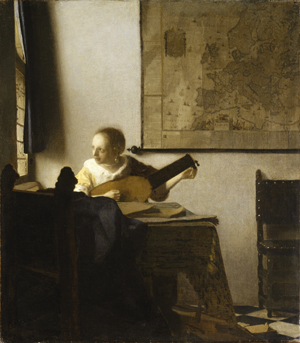
Johannes Vermeer’s “Woman With a Lute” is in Pasadena at The Norton Simon Museum through September 26. The painting is on loan from The Metropolitan Museum of Art in New York. When it is returned to The Met, there will not be a Vermeer on the West Coast—none of our museums own one. This fact is more a result of Vermeer’s production than the quality of collections in the West; only 36 works have been attributed to him. An excellent 15-minute Norton Simon Museum Podcast has been produced featuring Chief Curator Carol Togneri’s interview of the Met’s Curator of European Paintings, Walter Liedtke: http://www.nortonsimon.org/podcasts.

The Norton Simon Museum is a worthy temporary home for this gem. If you live in Southern California or you are traveling in the area, a stop at this beautiful, compact museum is well worth your time. The collection is broad and includes outstanding holdings of Early Renaissance, High Renaissance, 17th and 18th Century European, Asian, Impressionism, Modern, Contemporary, prints and photographs. Hopefully, you’ll have some time to relax and have lunch in the charming sculpture garden. Although you may have never been there, you have certainly seen “Norton Simon Museum” on the building in the background of Rose Parade telecasts.

In my opinion, Norton Simon is the finest museum, per square foot, on the West Coast. http://www.nortonsimon.org/

Cheers to Angelenos for Defeat of Carmageddon!!

•July 16, 2011 • 1 Comment

I rarely deviate from commentary on food, wine and hotels (and sometimes art), but I must dive into some political commentary as it relates to the over-hyped closure of the 405 Freeway in Los Angeles this weekend. In the true spirit of this blog I would like to raise a glass of Champagne to all residents of Greater Los Angeles and those tourists who are visiting from around the world.

The so-called Carmageddon never materialized in Los Angeles because everyone pulled together and mitigated the potential traffic nightmare. It’s amazing what we can accomplish when we all strive for the same goal. More importantly, look back on the dialogue over the past several months regarding the 53-hour shutdown of the 405 Freeway. Political bickering was not a part of the exchange. The message was clear from all sides: we need to adjust our driving habits for a couple of days and everything will be back to normal on Monday morning. And that is what is happening! When citizens work together, we have unassailable power. When ALL politicians join us, we are unstoppable. However, when we allow politicians to divide us, we are practically helpless, and unfortunately that’s typically what politicians desire. They do not want us to coalesce to generate common sense solutions. Politicians want us to fight each other and mock each other on their behalves. It’s an outcome that fills their campaign coffers and keeps them in office for far too long. Somehow, they took a break from their normal routines and look what happened! Please use Carmageddon as an example of the extraordinary power of ordinary citizens, and use it as a roadmap to solving even bigger issues in Los Angeles, California and the United States. Cheers to Angelenos for pulling together to steamroll a potential problem. We can accomplish even more when we stick together!

What Should I Do With This Cork?

•June 26, 2011 • 1 Comment

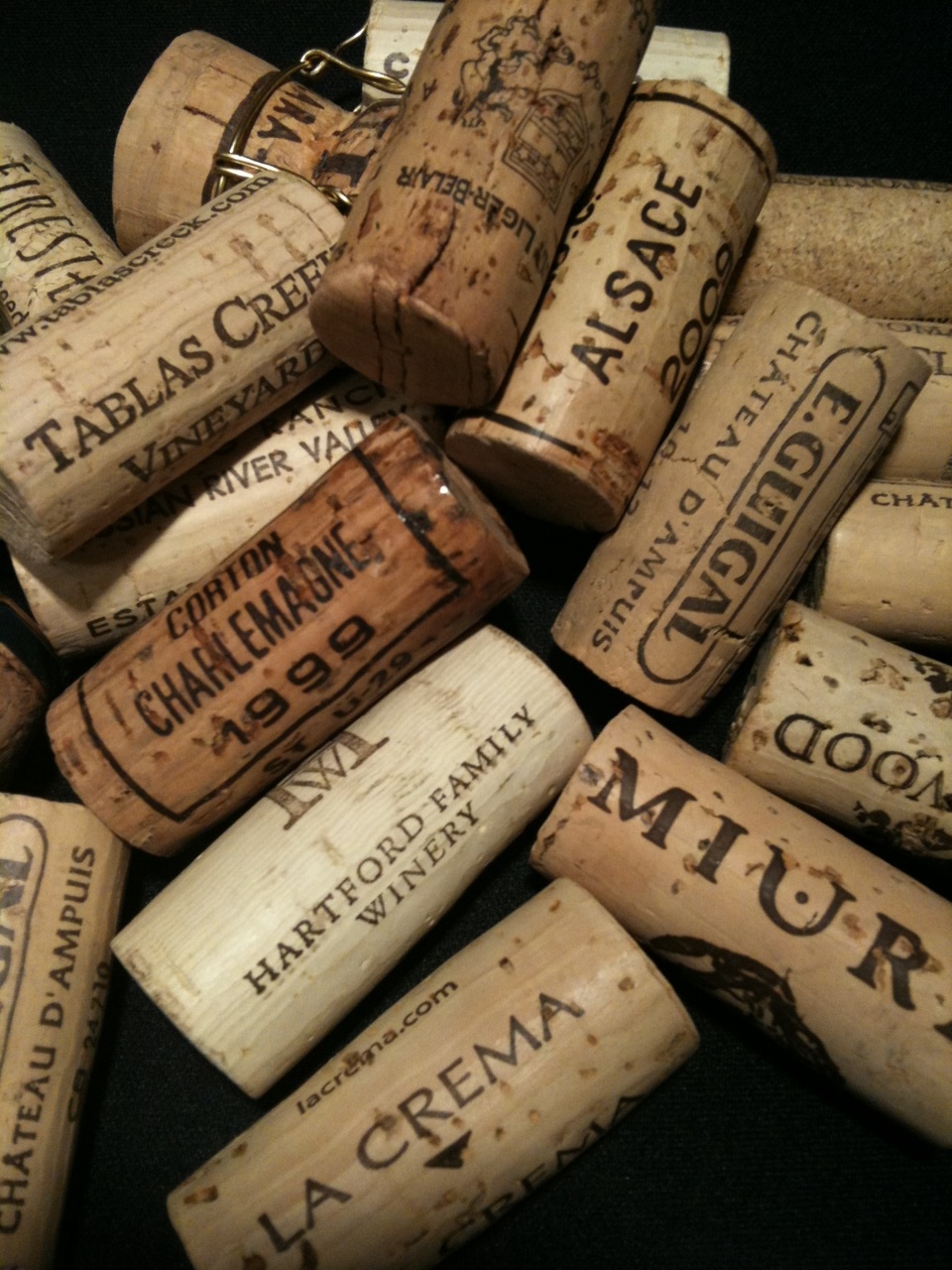
So you’re on a first date at a fancy restaurant and you’re trying to impress your companion with your food and wine knowledge, among other things. The sommelier opens your expensive bottle of wine and promptly presents you with the cork. What should you do with it? You could put it in your pocket, or in your ear if you’re a jokester, or tell the sommelier that it’s a nice cork, one of the finest you have ever seen. The best thing to do, however, is to simply confirm that the stamp on the cork matches the winery on the bottle, and then say “thank you.” Don’t smell it or marvel at the wine saturation, or any tartrates that may be clinging to the bottom. It’s not about that.

The ritual of the presentation of the cork at restaurants actually has its origins in, of all things, humidity and fraud. When paper labels made their way onto wine bottles starting in the 1800s, humid French and British wine cellars would eventually decimate their readability and/or their ability to stay affixed to the bottle. How could a wine producer make sure their customers trusted what they were drinking if the label had disappeared? Wineries eventually began to stamp their name and logo on the cork, of course. Restauranteurs would, in turn, present the cork at the table to confirm the wine’s origin. If the cork was removed in the kitchen and subsequently presented at the table, it left plenty of room for suspicion. After all, how would customers know if that particular cork actually came from the bottle they ordered?

In addition to humidity, fraud also played a major role in the cork presentation at restaurants. Phylloxera decimated the vineyards of Europe in the late 1800s, and since the top wineries were in very short supply, many dishonest restauranteurs attempted to switch labels on wine bottles and pull the cork before presenting them at the table. Smart wine producers and consumers demanded proof of authenticity and the cork presentation was one of their safeguards. (Wine fraud prevention has subsequently progressed with technology such as imbedded microchips in bottles and labels.)

Of course, fraud in the wine industry has been around for a long time. For more extensive information about wine fraud, I highly recommend Benjamin Wallace’s book, The Billionaire’s Vinegar.

My curiosity about the presentation of wine corks was nurtured by the fun book by Matt Kramer called Making Sense of Wine. I also highly recommend his book for the history of other wine rituals, and his astute opening chapter on “The Notion of Connoisseurship.” If you ever wondered what a connoisseur is, Matt Kramer will straighten you out. I have always appreciated his unique articulation of the wonders of wine.

Tasting E. Guigal Wines, with Philippe Guigal

•May 31, 2011 • Leave a Comment

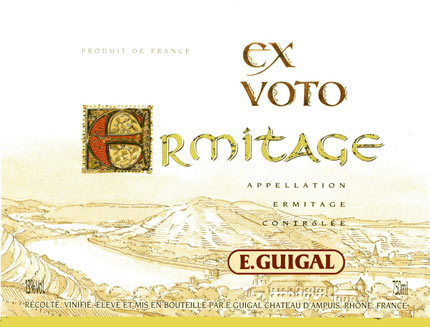
Last December I wrote about some amazing Côte-Rôtie from France’s Northern Rhône Valley: E. Guigal’s La La’s — The Finest Côte-Rôtie?. I recently attended a Guigal event at XIV in Los Angeles and was fortunate to taste one of the La La’s: 1996 La Landonne! We also tasted 2006 and 2007 Ermitage Ex-Voto Rouge, 1996 Côte-Rôtie Chateau d’Ampuis, 2008 Saint-Joseph Vignes de l’Hospice, 2008 Saint Joseph Lieu-Dit Rouge, 2007 Ermitage Ex-Voto Blanc, 2009 Saint Joseph Lieu-Dit Blanc, 2009 Condrieu La Doriane, and several other Guigal gems.

The wines showed extremely well, were excellent examples of their respective appellations, and exhibited superb balance. The wines, however, were not necessarily the only stars of the event. We were also fortunate to meet Philippe Guigal, who passionately led us through a presentation of the Rhône Valley in general, and then specifically the Northern Rhône, and his wonderful wines. Philippe is the third-generation winemaker who is ably continuing the proud tradition of his father, Marcel, and his grandfather, Etienne, the firm’s founder.

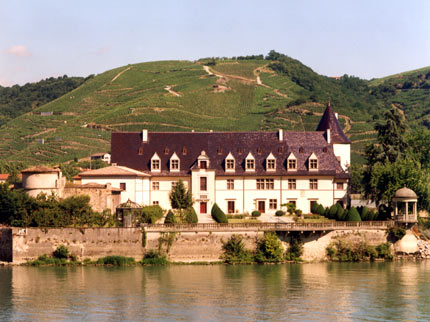
E. Guigal, located at Ampuis in the Northern Rhône (pictured above), is both a domaine and negociant. That is, they vinify grapes from their own estate vineyards and also purchase grapes and wines from other growers and producers throughout the Rhône Valley. All of the wines, however, are meticulously finished, aged and bottled in Guigal’s own cellars. The firm also produces wine from almost every Rhone AOC, including Côte-Rôtie, Condrieu, Hermitage, Croze-Hermitage, St. Joseph, Tavel, Châteauneuf-du-Pape, Gigondas and Côtes du Rhône.

Much has been written about the Guigal family, their bottlings, vineyards, philosophy, and contributions to the success of the Rhône Valley. The most important aspect of their winemaking, in my opinion, is the elevage, or aging before release. Their wines spend an unusually long time in tank, barrel and bottle before release. For example, the current vintage of Guigal Côtes du Rhône Rouge is 2007, and it was only released a few months ago! Most producers are currently selling 2009. The 1996 Côte-Rôtie La Landonne mentioned above, spent 42 months in new French oak, as do all of the La La’s. Guigal’s commitment to quality and consistency, from vineyard to bottle, is unrivaled. It’s what makes their wines a pleasure to drink, and luckily for me, to sell. http://www.guigal.com/

Jess Stonestreet Jackson – 1930-2011

•April 24, 2011 • Leave a Comment

I regret that I never had the opportunity to meet Jess Jackson. I have worked for one of his companies for only a short time, but I felt like I knew him because I have many associates who interacted with him for many years, and they fondly told countless stories about Jess. He was always referred to as Jess, not Mr. Jackson, not the owner, or the boss. He and his family owned and operated the business and, even though it is a big enterprise with many hundreds of employees, it still maintains a family feel and is immune to the complexities of large, public, wine corporations.

I do not need to chronicle Jess’s career, as it has been expertly done by every major news organization since his death on April 21. I want to simply add a few thoughts that were not necessarily widely covered or emphasized, and things in particular that impressed me about this great man. (I also chose to include a photo from the early days (in the 70s) that has not been widely used.)

First and foremost I want to thank Jess Jackson for my job. All of the tributes and obituaries around the country obviously implied as much, but it must be specifically stressed that throughout his long career, Jess Jackson employed many thousands of people, not just in this country, but around the world. Thousands more are employed by the companies that distribute and re-sell his wines, and the suppliers that sell bottles, corks, packaging, etc. Workers and suppliers in France, Italy, Chile, and Australia have benefited from Jess’s overseas operations. Today, over 1,000 people are employed by Jackson Family Wines and the companies it operates. Jess Jackson provided substantial careers, livelihoods, and retirements for many, many people. I am fortunate to be one of them.

Jess’s love for horses, and his efforts to reform horse racing, have also been well documented, but I particularly appreciate one aspect of his passion that was not emphasized enough. He was a huge advocate of breeding more strength into horses’ bloodlines to ultimately reduce and prevent breakdowns during racing. He believed that owners should resist the motivation to retire horses at early ages, in their quest to realize lucrative breeding fees. He thought that horses should race longer, become stronger and pass that strength onto future generations. Subsequent offspring would eventually help reduce the tragic breakdowns that unfortunately happen in horse racing. Jess became such a strong advocate of this philosophy, that he was asked to testify about the subject in front of Congress. He challenged breeders and owners to breed horses for racing, not selling, “…we need stamina and durability as well as speed. Too many breeders end up producing heavily conformed upper-body-muscled horses with relatively fragile legs.” He was as passionate about horse racing as he was about wine, and the sport has evolved and improved because of his love and compassion for thoroughbreds.

Jess also had a passion for American culture and wine’s place in our lifestyles. “Wine is a part of our cultural heritage,” he said. “It has always been the traditional partner with food. Wine celebrates friends, family, and love – all of the best things in life.” Wine was obviously more than a business to Jess Jackson.

In closing, I want to acknowledge that Jess was obviously an extremely quotable figure; but amazingly, one of the most profound things he ever said didn’t involve wine or horses, but farming. He proclaimed that farming “restores your moral center and your soul to the relative insignificance of life in the universe.” It was a humble, yet wise, statement from a man who had a huge impact on life in this country and around the world. Rest in peace, Jess Jackson. http://www.kj.com/

Wine Clubs: Why Do Newspapers Want to be in the Wine Business?

•March 10, 2011 • 2 Comments

I remember paging through the Wall Street Journal a couple of years ago and stumbling upon a full-page ad promoting their brand new wine club, called WSJwine. I was vexed because I sell wine for a living and I also subscribe to the Journal, and I thought to myself, “now I have to compete against THEM?!” Geez, that’s a funny way of thanking someone for their patronage. About a year later, the New York Times Wine Club was launched, and the Los Angeles Times Wine Club showed up for the party in 2010. Considering the state of their industry, shouldn’t newspaper publishers concentrate on making their core product more appealing, or are they so nervous about the future, that they have chosen to diversify into other businesses? Of course the demographics of wine consumption match up well with their readership, but that is also one of the the major reasons they are in trouble: their average reader is getting older and older. But instead of revamping their publications and completing the transition to the Internet to attract younger readers, some media companies have chosen to ride into the sunset with their aging supporters.

But why wine? Did they also consider cheese, caviar or chocolates? There are obviously some important synergies here that are driving the newspaper/wine club phenomena. Newspaper advertising revenue has declined for 15 consecutive quarters and publishers are desperate to generate new revenue streams. For the first time, online advertising surpassed print newspaper ads last year, $25.8 billion to $22.8 billion (eMarketer ). Circulation is actually up at the Wall Street Journal, but is down at both the New York Times and Los Angeles TImes (mediadecoder.blogs). Furthermore, newspaper readers tend be be older than the average media consumer and the average age is growing even higher. Wine drinkers also tend to be older than the average alcoholic drink consumer and voilà, we seem to have a nice match here. More and more young people are discovering the pleasures of wine, but that doesn’t necessarily help the newspapers, since those younger wine drinkers, in general, are not reading newspapers.

I’m sure the business plans that launched these operations are a little more detailed than my quick analysis, but I don’t think I’m too far off. Newspaper companies obviously have partners who are running these wine clubs, and the newspapers’ biggest contribution is the advertising, of which they have plenty of inventory. Global Wine Company runs the New York Times program, as well as clubs for Food and Wine Magazine and Williams-Sonoma. The LA Times club is run by Vinesse. There are plenty of clubs that are companies in and of themselves, and many wineries also operate their own clubs. The wine club business is quite a little industry in and of itself. They even have their own trade group called  the International Wine Club Association, and there is a website for reviews of wine clubs: wineclubreviews.net.

Of course, wine producers welcome wine clubs as additional distribution outlets for their products. Wine retailers are probably not as excited about the proliferation of wine clubs, although they have also jumped into the wine club business with their own versions. How about this curious relationship : Sherry-Lehmann Wine & Spirits, one of the top wine retailers in New York (and the country, for that matter) is a substantial, longtime advertiser in the New York Times, who thanked them for their years of patronage by starting a wine club! Sherry-Lehmann, in turn, recently launched their own club: Sherry-Lehmann/Kevin Zraly Wine Club! (I do not have firsthand knowledge of their relationship, but it seems logical that the Times initially gave Sherry-Lehmann the opportunity to run their wine club.)

If newspaper wine clubs help the wine industry grow and expose more people to the pleasures of wine, I’m all for it. At the same time, it would be nice to see newspapers strive to generate better products by concentrating on their core business—and the evolution of that business.

(Disclosure: I sell wine for a California distributor. The views expressed on FoodWineHotels.com are mine alone and do not necessarily reflect the views of my employer. I welcome your comments.)


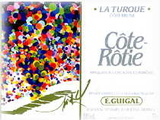
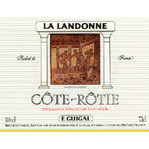
E. Guigal’s La La’s — The Finest Côte-Rôtie?

•December 5, 2010 • Leave a Comment

E. Guigal’s single vineyard Côte-Rôties (also known as the La La’s) certainly generate plenty of superlatives. These three distinct wines are the most expensive from France’s Rhône Valley and they are some of the most sought-after bottlings on the planet. They also consistently garner top ratings from critics, including Robert Parker who once proclaimed, “Guigal’s single vineyard Côte-Rôties are other-worldly in nearly every vintage. I have given these offerings more perfect scores than any other wines in the world.” In fact, these three wines have received 21 perfect 100-point scores from Mr. Parker: nine vintages of La Mouline; seven of La Landonne; and five of La Turque. The 2003 release of all three wines earned 100-point scores and retailed for up to $800 a bottle, the most expensive bottling of any Rhone wine. Robert Parker isn’t the only wine industry icon who loves Côte-Rôtie. Jancis Robinson (The Oxford Companion to Wine) calls it “one of the most exciting red wine appellations in France.” She also proclaimed, “One man, Marcel Guigal, is chiefly responsible for the recent renaissance of this zone.”

OK, enough with the superlatives. Most wine geeks agree that the La La’s are special wines. Let’s explore what makes these Côte-Rôties so unique and also learn more about their famous producer.

E. Guigal, located at Ampuis in the northern Rhône Valley, is both a domaine and negociant. That is, they vinify grapes from their own estate vineyards and also purchase grapes and wines from other growers and producers throughout the Rhône Valley. All of the wines, however, are meticulously finished, aged and bottled in Guigal’s own cellars. In addition to Côte-Rôtie (or ‘roasted slope’) they also produce wine from almost every other Rhone AOC, including Condrieu, Hermitage, Croze-Hermitage, St. Joseph, Tavel, Châteauneuf-du-Pape, Gigondas and Côtes du Rhône.

The firm is best known, however, for Côte-Rôtie, and in addition to the La La’s, they produce  a “regular” bottling called Brune et Blonde (retails for about $70) and Château d’Ampuis, which is produced from seven old-vine hillside parcels (retails for approximately $160).

Back to those incredible La La’s. La Landonne is a 5.2 acre vineyard exclusively planted to syrah and the wine is also 100% syrah. La Mouline’s 2.5 acres are planted to 89% syrah and 11% viognier, and the wine itself generally follows the same ratio. La Turque’s 2.3 acres are comprised of 93% syrah and 7% viognier and, as with La Mouline, the bottling is roughly the same as the vineyard plantings. All three of the La La’s spend 42 months aging in new French oak and the average yields are just under two tons per acre. (In France and Europe, vineyard sizes are typically measured in hectares: one hectare equals 2.47 acres. Yields there are computed in hectolitres per hectare. The above conversions are mine.)

It is also useful to know that France’s AOC law allows Côte-Rôtie to contain up to 20% viognier. The aromatics of syrah are enhanced by the addition of viognier and this white grape also, counterintuitively, enhances syrah with a deeper color when they are co-fermented.

The La La’s are obviously special wines from a venerable Rhone Valley producer. Their prices do not necessarily make them accessible to most of us, but they are a great expression of what is possible from Rhone wines, and they shed much-deserved light on Guigal’s other more approachable Côte-Rôties, and the amazing wines from the rest of their portfolio.

The U.S. importer of E. Guigal is Vintus Wines.